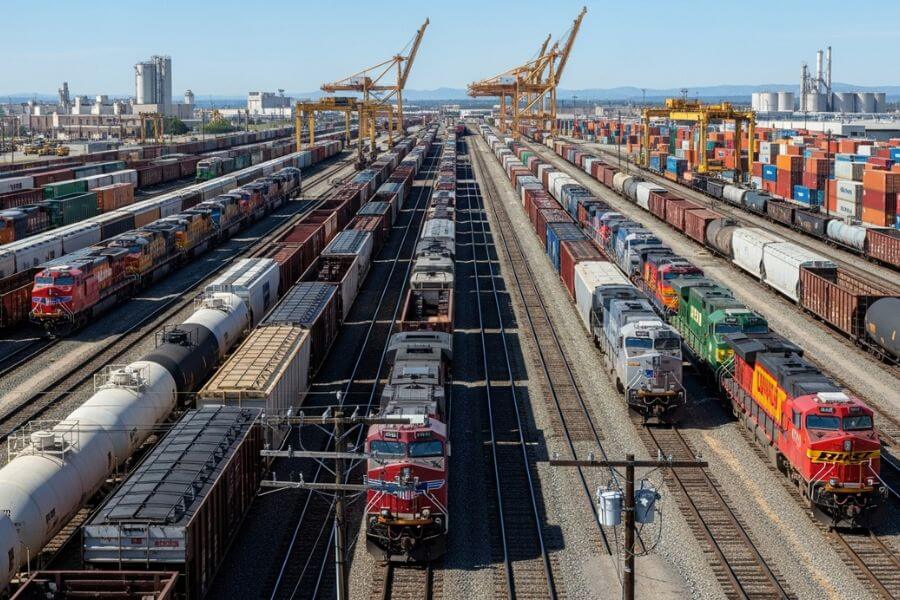
Why Great Lakes Supply Chains Are Gaining a Competitive Edge
The Great Lakes Mega Region is rapidly emerging as North America’s most strategic inland logistics hub — and for good reason. With modernized port infrastructure, enhanced Class 1 railroad connectivity, and a central location serving the manufacturing heartland, businesses that optimize their supply chains around these regional advantages are seeing dramatic improvements in cost, speed, and resilience.
At American Rail Center, we work with manufacturers and distributors every day to streamline their logistics operations. Here are eight proven strategies we’ve seen deliver real results in 2026.
1. Leverage Rail for Long-Haul Freight Over 700 Miles
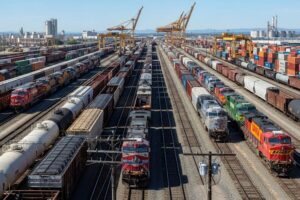
If you’re moving freight more than 700 miles, rail should be your first choice — not your backup plan. A single 10-car freight train can carry the cargo equivalent of 600 trucks, delivering unmatched fuel efficiency and cost savings for bulk commodities, raw materials, and intermodal containers.
The fastest-growing segment in rail logistics is intermodal shipping, which combines the long-haul efficiency of rail with the last-mile flexibility of trucking. By partnering with a logistics provider that offers twice-daily Class 1 interchanges, you can accelerate distribution while reducing per-unit shipping costs significantly.
2. Integrate Multimodal Transportation Under One Partner
The most optimized supply chains don’t just use multiple transportation modes — they coordinate them seamlessly under a single Multimodal Transport Operator (MTO). This means one partner manages your entire journey: rail for the cost-effective long-haul, trucks for flexible first- and last-mile delivery, and warehousing for strategic inventory positioning.
This integrated approach delivers measurable benefits:
- Cost optimization — Use the most economical mode for each segment
- Enhanced efficiency — Centralized coordination minimizes idle time and streamlines transfers
- Improved reliability — A single point of contact ensures faster problem resolution
- Increased resilience — Flexibility to use alternative routes when disruptions occur
- Lower carbon footprint — Prioritizing rail over road for long distances cuts emissions dramatically
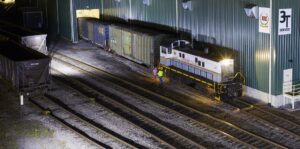
At our Walbridge facility, we provide exactly this kind of integrated solution — rail-served warehousing, transloading, and an in-house truck fleet that keeps your supply chain rolling without the complexity of managing multiple vendors.
3. Reduce Warehousing Costs Through Transloading and Cross-Docking
Storage is expensive. Every day your inventory sits in a warehouse, you’re paying for space, insurance, and tied-up capital. That’s why smart shippers are embracing transloading and cross-docking to accelerate inventory velocity.
Transloading transfers goods directly from railcar to truck (or vice versa), enabling seamless cargo transitions across modes. Cross-docking takes it further — incoming goods are immediately sorted and transferred to outbound trucks with minimal or no storage time.
Both strategies require precision execution. A modern Warehouse Management System (WMS) provides real-time inventory tracking and coordinates all facility movements. Optimized yard management ensures railcars and containers are positioned efficiently, and clear Standard Operating Procedures (SOPs) keep operations running smoothly.
4. Capitalize on Great Lakes Inland Port Infrastructure
The Great Lakes region is undergoing a logistics renaissance. Modernized inland ports are now handling international containerized freight with dual Class 1 rail access and roll-on/roll-off capabilities — creating a powerful alternative to congested coastal gateways.
For Midwest manufacturers and distributors, this means shorter transit times, reduced drayage costs, and better support for just-in-time inventory models. Projections show container volume growth of up to 400% by 2026 at regional ports, driven by industries like automotive, steel, agriculture, and heavy manufacturing.
Recent disruptions at coastal ports have highlighted the risk of relying on single gateways. Inland ports and rail networks in the Great Lakes offer a strategic hedge against these vulnerabilities — with predictable seasonal patterns that can be easily incorporated into annual logistics planning.
5. Optimize Warehouse Layout and Technology Integration
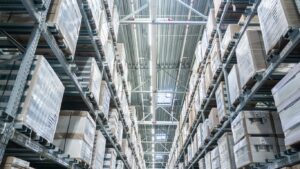
Inside your four walls, efficiency comes down to smart layout design and technology adoption. High-demand items should be stored closest to shipping docks (ABC analysis), and vertical space should be maximized with high-density shelving and mezzanines.
Technology is the central nervous system of modern warehousing:
- WMS and IMS — Automate operations and optimize demand forecasting
- RFID and barcoding — Dramatically increase inventory accuracy and speed up picking
- Automation — Automated Storage and Retrieval Systems (AS/RS) and Autonomous Mobile Robots (AMRs) handle repetitive tasks and improve throughput
At American Rail Center, our 300,000+ square feet of distribution and warehousing space is equipped with advanced systems that provide real-time visibility and control — so you always know where your inventory is and when it’s moving.
6. Improve Inventory Accuracy to Cut Hidden Costs
Inaccurate inventory is a silent profit killer. Lost inventory, stockouts, overstocking, and fulfillment errors all drain resources and damage customer relationships. The solution? Continuous cycle counting and a robust WMS.
Cycle counting — regularly counting small sections of inventory — ensures continuous accuracy without the disruption of a full physical count. Combined with just-in-time (JIT) inventory practices, you can minimize on-hand stock, reduce carrying costs, and free up valuable warehouse space.
When you partner with a logistics provider that has proven inventory management systems, you eliminate the costs associated with these common problems and gain the confidence that comes with real-time, accurate data.
7. Build Regional Resilience and Reduce Single Points of Failure
Supply chain resilience isn’t just about having backup plans — it’s about designing your network to avoid single points of failure from the start. Businesses that relied heavily on distant coastal ports learned this lesson the hard way during recent disruptions.
The Great Lakes region offers a strategic advantage: proximity to North America’s manufacturing heartland, access to major interstate highways, and integration with both the Great Lakes waterway system and the Inland Waterways network (including the Mississippi River). This creates multiple routing options and reduces dependence on any single gateway.
By working with a rail-served logistics partner in the heart of the Great Lakes Mega Region, you gain access to a distribution network that’s both efficient and resilient — with the flexibility to adapt when disruptions occur.
8. Plan Proactively for Seasonal Logistics Patterns
The Great Lakes system has predictable seasonal constraints, such as the winter closure of the St. Lawrence Seaway. Rather than viewing this as a limitation, smart shippers incorporate it into their annual planning — building inventory strategically or shifting modes during winter months to ensure a steady flow of goods year-round.
This kind of proactive planning, combined with a logistics partner who understands regional patterns, ensures you’re never caught off guard. It’s about turning predictable challenges into manageable elements of your supply chain strategy.
Ready to Optimize Your Great Lakes Supply Chain?
The most successful manufacturers and distributors in the Great Lakes region aren’t just reacting to logistics challenges — they’re strategically positioning themselves to capitalize on the region’s unique advantages. Rail integration, multimodal coordination, advanced warehousing, and regional resilience aren’t just buzzwords — they’re the foundation of a competitive supply chain in 2026.
At American Rail Center, we’ve spent over 50 years helping businesses streamline their logistics operations through our rail-served mega distribution railport in Walbridge, Ohio. With 24/7 operations, twice-daily Class 1 interchanges, 300,000+ square feet of warehousing, and an integrated truck fleet, we deliver the seamless cargo transitions and custom solutions that keep your supply chain rolling.
Contact our team today at (800) 999-0336 to discuss how we can optimize your distribution strategy and reduce costs while improving speed and reliability. Let’s build a supply chain that’s ready for whatever comes next.